
Al-Muthanna University President Attends Master’s Thesis Defense at the College of Science.
May 12, 2026
President of Al-Muthanna University Receives a Number of Lebanese Students under the “Study in Iraq” Initiative
June 22, 2026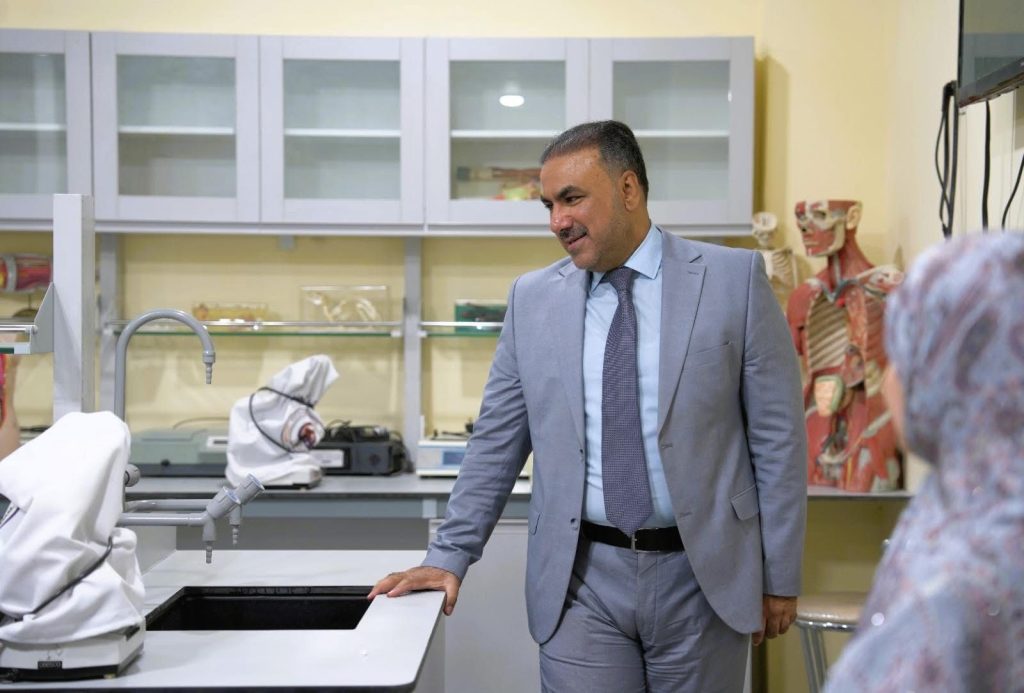
The scientific and computer laboratories at Al-Muthanna University represent the lifeblood of the educational and research process and constitute the fundamental pillar upon which the university has relied to achieve remarkable qualitative progress since its establishment in 2007. These laboratories have served as practical learning environments and gradually evolved into knowledge centers that adopt the latest international standards in their operations, contributing to the graduation of qualified professionals capable of participating in the development of modern Iraq. The history of these laboratories extends back to the university’s early years. During the period between 2007 and 2012, the university focused on establishing essential laboratories for the Colleges of Science and Education and providing the necessary equipment for the departments of Chemistry, Physics, and the scientific departments within the College of Agriculture, in addition to establishing research stations. With the university’s expansion and the opening of new specialized colleges between 2013 and 2020, the infrastructure witnessed a significant transformation, as the number of specialized laboratories increased to dozens across various applied sciences. In the current stage (2021–2026), the university has entered a phase of technological advancement through the inauguration of new laboratories equipped with state-of-the-art analytical devices, making the university an accredited consultancy center within the province, particularly in the Colleges of Applied Medical Sciences and Veterinary Medicine. The College of Pharmacy includes an integrated system of specialized laboratories covering pharmaceutical chemistry, pharmaceutics, pharmacology and toxicology, in addition to biology, anatomy, and microbiology laboratories.
These efforts are complemented by the College of Applied Medical Sciences, especially the Department of Pathological Analysis, which utilizes advanced technologies such as Polymerase Chain Reaction (PCR) for genetic research. Likewise, the College of Science has emerged as a vital research center following the modernization of the Chemistry, Physics, and Biology laboratories with fully equipped laboratory benches and advanced research instruments. Parallel efforts are also evident in the College of Medicine, which provides specialized laboratories in biochemistry, physiology, anatomy, and immunology. On the applied and humanities side, the College of Education for Human Sciences possesses distinctive specialized laboratories, particularly within the Department of Geography, which includes laboratories for Geographic Information Systems (GIS), cartography, weather, and climatology. All these colleges are unified in their commitment to providing advanced computer laboratories aimed at digitizing education and training students in modern software applications according to their respective specializations.
These laboratories operate as innovative environments and adhere to scientific standards, especially in the applied scientific colleges that follow the Good Laboratory Practice (GLP) system, ensuring the accuracy of results and the safety of researchers. All of these laboratories are regularly evaluated by specialized ministerial committees that periodically visit the university. Among the newest additions are the laboratories of the College of Artificial Intelligence Engineering and Cybersecurity, which represent the latest qualitative advancement. These laboratories are equipped with high-performance technologies, modern programming environments, and advanced software systems. They include two computer laboratories containing 88 modern MSI laptops with advanced specifications suitable for students in the Departments of Artificial Intelligence and Cybersecurity. These devices are equipped with the necessary software to support the practical components of specialized courses, contributing to the preparation of a generation capable of engaging with future technological challenges.